

ShortStoryEngine Review: Can Short Stories Help Readers Discover Your Books?
Disclosure: I created ShortStoryEngine, so this is not an independent review. This overview explains what the product does, who it may help, its limitations and the current offer so you can make an informed decision. If you purchase it, I receive the sale revenue.
Finishing a book is a substantial achievement, but publication creates another challenge: helping the right readers discover it.
An author can spend weeks or months planning, writing, editing, formatting and publishing a book. Once it reaches Amazon or another store, however, it may still depend heavily on its product page, occasional promotional posts and the platform’s discovery system.
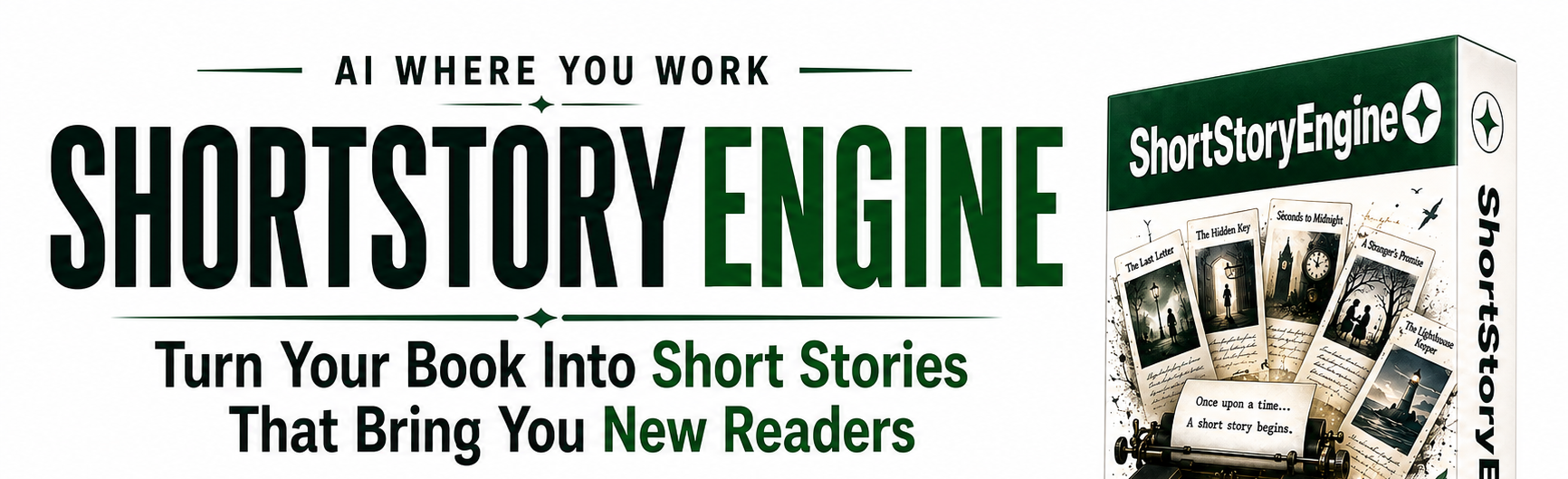
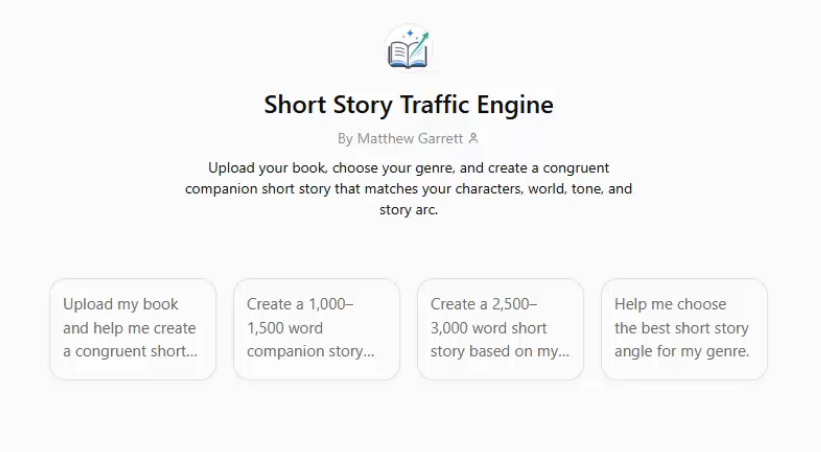
ShortStoryEngine was created to address that gap. It is an AI-assisted creation engine for turning an existing book, developing manuscript or early story idea into standalone short stories. Those stories can then be used as reader magnets, newsletter material, website content, serialised posts or other reader-discovery assets.
This is not a promise that a short story will automatically sell a book. No legitimate marketing tool can guarantee readers, traffic, rankings or sales. The practical idea is to create more useful opportunities for potential readers to encounter an author’s characters, voice and story world.
What is ShortStoryEngine?
ShortStoryEngine is designed specifically around the relationship between a larger book project and the smaller stories that can exist around it.
If you already have a book, the starting material could be its characters, setting, themes, conflicts or unexplored events. If you do not yet have a completed book, you can begin with a genre, premise, character, topic, theme or setting.
The objective is not to copy sections from a manuscript or create unrelated fiction. It is to develop a story that makes sense on its own while remaining connected to the author’s wider work.
The seven featured companion-story frameworks include:
- a prequel moment;
- a missing scene;
- a side-character spotlight;
- an origin story for a character or place;
- a seasonal story;
- a bridge between books; and
- an exclusive reader-magnet story.
These are creative starting points rather than guaranteed formulas. Authors still need to judge whether an idea suits their characters, genre and intended readers.
How the process works
The workflow begins with what the author already has. That might be a published novel, a draft, a story bible or a simple concept.
The author then chooses a companion-story direction and develops it into a standalone piece. A good result should be understandable to a new reader without requiring detailed knowledge of the main book. It can still create curiosity about the larger story, but it should provide value as a story in its own right.
After creation, the story can become raw material for several reader touchpoints. For example, an author might use the full story as a reader magnet, feature it in a newsletter, serialise it on a suitable platform, extract a short teaser or publish it on an author website.
ShortStoryEngine does not automatically publish the result. That is deliberate: platforms have different rules concerning rights, AI-assisted content, promotional links, disclosure and exclusivity. The author retains control and must review both the story and the destination’s current requirements.
The Short Story Traffic Playbook
Creating the story is only part of the product. The front end also includes the Short Story Traffic Playbook, which focuses on what to do with the completed material.
Its stated coverage includes choosing suitable story types, turning one story into multiple assets, social sharing, newsletters, reader-magnet setup, a 30-day implementation plan, reusable templates and publishing considerations.
This matters because another folder of unused AI content would not solve the discovery problem. The Playbook connects creation with consistent, practical use.
The 30-day plan is not an overnight-results promise. It is a schedule for creating, sharing, repurposing and revisiting useful story material over time. Outcomes will depend on the quality of the writing, the book, the audience, the platforms chosen and how consistently the plan is implemented.
The launch quality-control bonus
Launch customers also receive the Short Story Continuity & Quality-Control Kit. This 16-page workbook and modular prompt pack helps authors check canon, character voice, spoilers, new-reader clarity and publication readiness before sharing an AI-assisted story.
The kit does not promise perfect continuity or replace professional editing. It provides a structured review process while keeping the final decisions with the author.
Who is it for?
ShortStoryEngine is most likely to suit:
- fiction authors with an existing book or series;
- self-publishers who need additional reader-facing material;
- aspiring authors developing a story world before publication;
- authors who want ideas for newsletters or reader magnets;
- users comfortable reviewing and editing AI-assisted drafts; and
- buyers of book-creation tools who need a manageable next action.
It may be especially appealing to someone who finds “promote your book” too broad. Creating one useful companion story can provide a more specific place to begin.
Who is it not for?
This product is unlikely to suit someone seeking completely automatic publishing or guaranteed sales. It also will not replace professional editing, careful rights management or the author’s own creative judgement.
If you dislike revising AI-assisted material, do not want to create fiction, or expect software to build an audience without continued participation, this is probably not the right fit.
Before uploading unpublished material, you should also review the current privacy terms and understand how any connected AI service handles data. Check the current product documentation for any separate AI account, usage or technical requirements.
Advantages
- A focused use case: It is built for companion and discovery stories rather than general AI writing.
- Works at different stages: Users can begin with a published book, unfinished manuscript or early idea.
- Concrete story frameworks: The seven formats reduce the “what should I create?” problem.
- Creation and implementation: The included Playbook covers ways to use the output, not just generate it.
- Realistic positioning: The sales page explicitly avoids guarantees of book sales, traffic or platform acceptance.
- Accessible launch price: The current coupon brings the front end into the typical low-cost software range.
Limitations
- AI-assisted stories still require human review, editing and fact-checking.
- The system does not automatically publish or distribute stories.
- Results depend on story quality, audience fit and consistent implementation.
- Platform rules concerning AI, rights and promotional links can change.
- Authors must take particular care with unpublished manuscripts and intellectual property.
- Optional upgrades are presented after the front-end purchase and are not included with it.
Price and launch conditions
The WarriorPlus offer lists a $37 front-end price. At the time of writing, the sales page applies the $10 `STORYVIP` launch coupon, reducing the price to $27.
The front end includes ShortStoryEngine and the Short Story Traffic Playbook as a one-time purchase. Launch customers also receive the Short Story Continuity & Quality-Control Kit. The sales page states that the purchase is covered by a 30-day money-back guarantee.
The promotional launch is scheduled to end at 11:59 p.m. US Eastern on Thursday, 10 September 2026. Always check the sales page for the current price, coupon and availability because those details can change.
Optional upgrades cover additional parts of the publishing and promotional workflow. They are not required to purchase the front end, and buyers should assess each separately rather than assuming the entire funnel is included for $27.
Frequently asked questions
Do I need a finished book?
No. You can begin with an existing book, but the workflow can also start with an idea, character, genre, setting or theme.
Does it simply extract chapters from my book?
No. The intended approach is to create new standalone stories around the source material, such as prequels, missing scenes, origins or side-character stories.
Will it automatically find readers or sell my book?
No. It helps create additional reader-discovery material. It does not guarantee traffic, sales, royalties, reviews, rankings or publishing acceptance.
Does it publish stories automatically?
No. You decide where and how to publish. You must check each platform’s current content, rights, disclosure and promotional-link rules.
Can one story be used in several ways?
Potentially. Subject to the relevant rights and platform terms, a story might become a reader magnet, newsletter feature, website article, serialised post, excerpt or promotional teaser.
Is there a guarantee?
The sales page currently states a 30-day money-back guarantee. Read the published terms before purchasing.
Final verdict
ShortStoryEngine has a clearer purpose than a general “write fiction with AI” tool. Its strongest idea is that a book or developing story world can support several smaller, useful entry points for readers.
That does not remove the need for creative judgement, editing, platform research or consistent promotion. What it can do is make the next step more concrete: choose a companion-story angle, create something that stands on its own, and use it thoughtfully to introduce readers to the wider work.
For fiction authors, KDP publishers and aspiring authors who understand those responsibilities, the combination of the creation engine and Traffic Playbook offers a structured way to build more reader-facing material around a book.
Review ShortStoryEngine, the current coupon and all purchase terms here:
View ShortStoryEngine - https://shortstoryengine.com/