
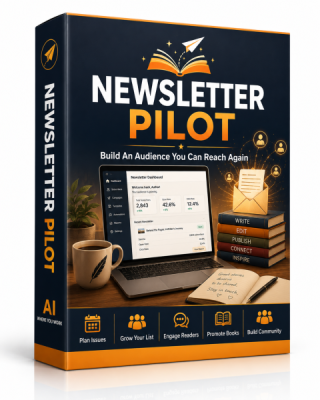
Vendor relationship note: Newsletter Pilot is a WPToolkit product. This is a product overview, not an independent hands-on review, and it does not report personal results or customer outcomes.
Authors rarely run out of possible material. A book contains characters, themes, research, decisions, lessons, scenes and unanswered questions. The publishing process creates even more: cover choices, launch planning, reader feedback, discoveries, mistakes and ideas for what comes next.
The difficult part is often turning that material into a useful newsletter on a regular basis.
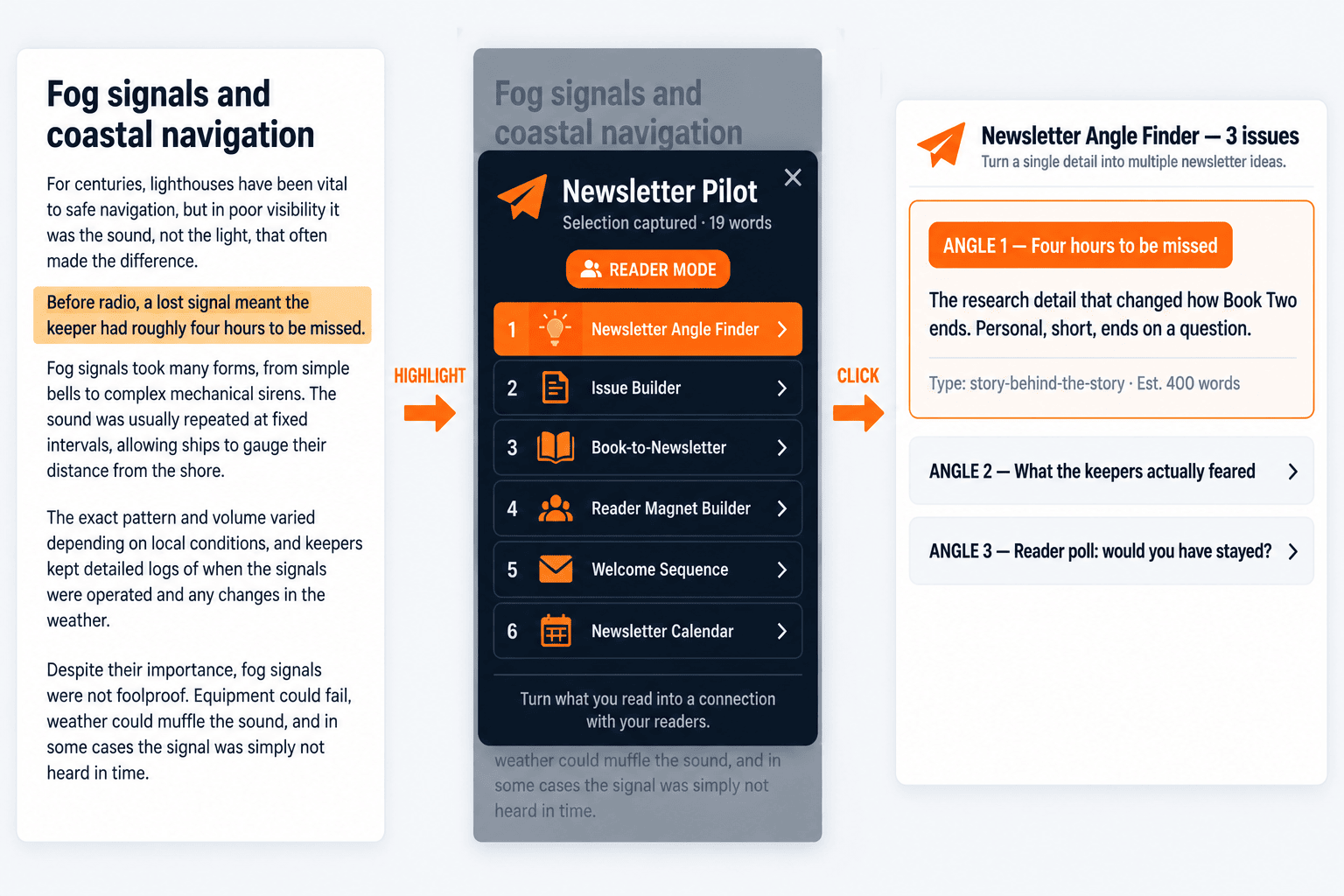
Newsletter Pilot is a browser extension designed to help authors, self-publishers and publishing-focused creators plan and draft newsletter content from the work they are already doing. Its central idea is simple: rather than begin with an empty AI chat and a vague request, start with a book, passage, webpage, piece of research or publishing question and choose a specialist workflow.
That makes the product less about “AI writing emails for you” and more about creating a repeatable editorial process. It is important to understand the boundary. Newsletter Pilot is not an email service provider. It does not store subscribers or send campaigns. It helps with the strategy and content before the send.
What Newsletter Pilot includes
The sales page describes 12 workflows in four stages:
- Decide what to send: Newsletter Angle Finder, Issue Builder and Book-to-Newsletter turn source material into a focused idea and draft.
- Grow the list: Reader Magnet Builder, Welcome Sequence and Audience Growth Planner help create a reason to subscribe and plan what happens next.
- Keep readers interested: Book Promo Builder, Engagement Engine and Newsletter Calendar balance promotion with useful, participatory content.
- Get more from each issue: Repurpose Engine, Newsletter Monetizer and Newsletter Doctor adapt ideas, explore suitable revenue options and review a draft for weaknesses.
These are planning and drafting tools. Results depend on the source material, chosen AI service, instructions and the buyer’s editing judgement.
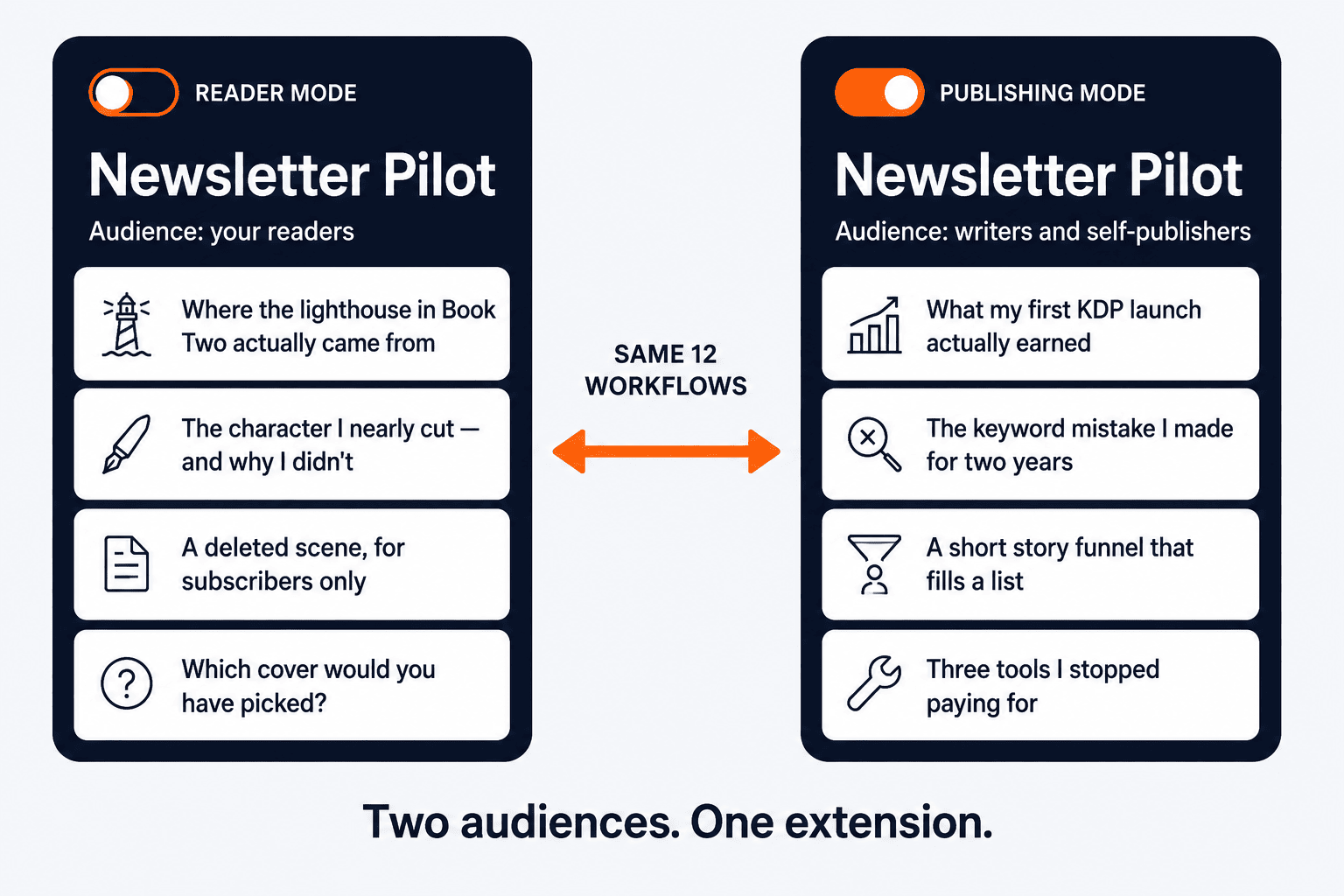
Two newsletter modes
Newsletter Pilot offers two modes for different relationships.
Reader Newsletter Mode is aimed at authors communicating with readers, fans, book buyers and people interested in a genre, character or story world. Publishing Newsletter Mode is for an audience interested in writing, KDP, self-publishing, book marketing and the creator’s publishing journey.
That distinction is useful because an email written for fantasy readers should not sound like an email written for other self-publishers. The underlying workflows may be similar, but the audience, examples, language and call to action should change.
The included PublishLift Reader Growth Toolkit
The front end also includes the PublishLift Reader Growth Toolkit. The sales page lists a Book Campaign Brief Builder, 12 reader-growth prompt tools, a manual, a NewsletterPilot Companion Playbook, four campaign recipes, two worked examples and a quick-start set.
The reusable Campaign Brief covers the book, audience, hook, voice, offer and guardrails. Specialist prompts support reader magnets, campaign planning, descriptions, landing pages, launches, social content and outreach. Newsletter Pilot is the ongoing content layer; PublishLift is the wider reader-growth system. The real value depends on implementing relevant tools, not on the size of the bundle.
What Newsletter Pilot may help with
The clearest benefit is reduced blank-page friction. Starting with a real passage, page or publishing problem is more concrete than asking a general chatbot to “write a newsletter.” The workflows provide structure: find an angle, build an issue, review it and place it in a wider calendar.
They may also help authors vary their content beyond repeated book-sale announcements. A permission-based email list can create a more direct relationship than relying entirely on a marketplace or social platform. It is not permanent—subscribers leave and deliverability changes—but it is a channel the author can manage more directly.
Who it is for
Newsletter Pilot is most likely to suit:
- Fiction and non-fiction authors with existing source material.
- Self-publishers who want a repeatable newsletter planning process.
- Publishing educators or creators who email about writing, KDP or book marketing.
- People who are comfortable reviewing and editing AI-assisted drafts.
- Buyers who already have, or plan to choose, a separate email service provider.
It is less likely to suit:
- Someone who needs an email platform that hosts subscribers and sends campaigns.
- A buyer expecting the software to find subscribers automatically.
- Someone looking for guaranteed book sales, rankings, traffic, opens or income.
- A creator unwilling to check AI output for accuracy, rights, claims, spoilers and tone.
- A person outside books or publishing who cannot adapt the specialist workflows to a genuine use case.
Important limitations
AI-generated content can sound plausible while being wrong, generic or inconsistent with a book, so every draft needs review. Check the sales page for supported browsers, and whether you need your own AI account, API key or credits, before buying.
Pros and cons
Pros
- Clear specialist focus on author and publishing newsletters.
- Twelve named workflows cover planning, drafting, growth, engagement and review.
- Two modes distinguish reader-facing and publishing-industry audiences.
- Uses source material the author already has or is already reading.
- Includes a wider reader-growth toolkit with templates, prompts and worked examples.
- Public copy clearly states that the product is not an email sending platform.
- The sales page includes responsible warnings about reviewing AI-generated output.
- One-time front-end payment is stated on the public page, subject to final price verification.
Cons
- It serves a narrower author/self-publisher niche rather than every business owner.
- The user still needs an email service and a way to collect permission-based subscribers.
- AI output requires careful editing and fact-checking.
- AI provider requirements and any usage costs should be checked on the official page before buying.
- No independent customer results are published yet.
Price and guarantee
Newsletter Pilot is a one-time purchase. The current price, refund terms and what is included are listed on the official sales page. Check them there before buying, as launch offers change.
Frequently asked questions
Does Newsletter Pilot send emails?
No. It helps plan and draft newsletter content. A separate email service is required to manage subscribers and deliver campaigns.
Will it build my subscriber list automatically?
No. It can help plan reader magnets, welcome content and growth opportunities, but list growth still requires an offer, signup path, promotion, consent and implementation.
Is there a guarantee of more readers or book sales?
No. The public disclaimer specifically says the product does not guarantee book sales, royalties, rankings, reviews, readers, traffic, subscribers, acceptance, advertising results or business income.
Final verdict
Newsletter Pilot has a credible, specific purpose: help authors turn books, research and publishing activity into newsletter ideas and drafts without beginning from a blank page every week. Its strongest feature is not a single generated email but the structured set of workflows around deciding what to send, keeping readers engaged and improving each issue.
It should be considered a content and planning assistant, not a complete newsletter business in a box. Buyers still need an email service, a permission-based signup process, useful source material and the willingness to edit what the AI produces.
For authors and self-publishers who recognise that exact bottleneck, it is worth a look. For anyone seeking automatic subscribers or guaranteed commercial results, it is not the right fit.
See the current product details, requirements and terms on the official page: